What Is IPTV Streaming?
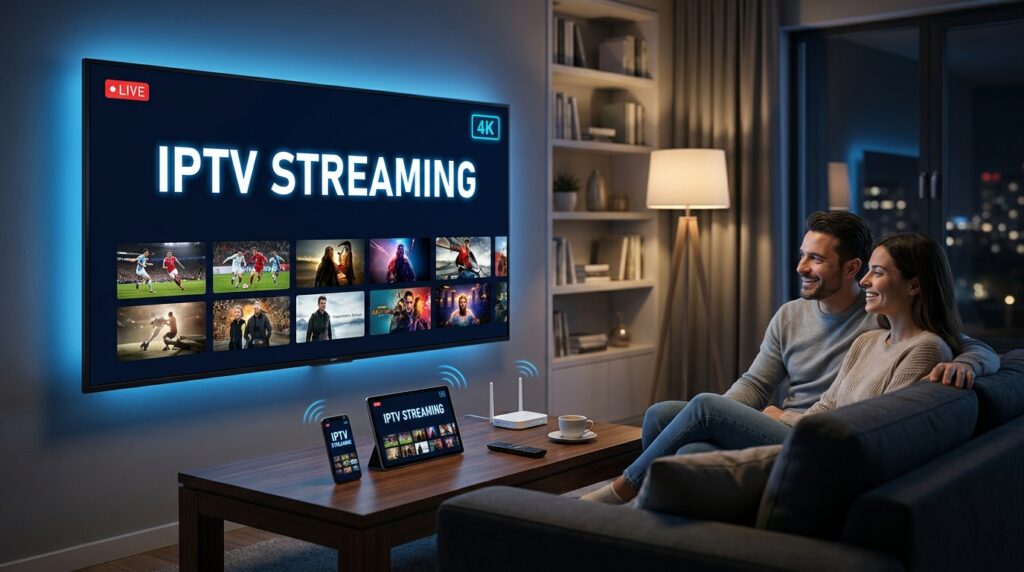
IPTV streaming delivers television over your internet connection instead of a cable line, satellite dish, or a patchwork of apps. The Wikipedia entry on Internet Protocol Television covers the mechanics.
The core idea is simple: your channels arrive as data over the internet, the same pipe that carries everything else you do online.
That single difference gives IPTV streaming advantages the older methods cannot match:
- No physical cable line or dish required
- Content delivered on demand and live
- Access on devices you already own
- Flexibility the legacy options lack
The rest of this guide compares IPTV streaming to each alternative, starting with the one it most often replaces.
IPTV Streaming vs Cable
This deserves the first substantive section, because cable is what most people leave for IPTV streaming.
Cable was the default for decades, but IPTV streaming beats it on the factors that frustrate cable customers most.
Where IPTV streaming wins:
- Price: far cheaper than a typical cable bill
- No contracts: no lock-in, cancel anytime
- No equipment rental: no box fees stacking up
- More content: vastly more channels and VOD
Where cable still holds an edge:
- Guaranteed local channels through licensing
- No dependence on your internet quality
- Established customer protections
For most households, the price and flexibility of IPTV streaming outweigh cable’s advantages. A cable bill with equipment rental and contracts simply cannot compete with IPTV streaming on cost. Compare a real lineup on our full IPTV channels list.
IPTV Streaming vs Satellite
The second comparison favors IPTV streaming even more clearly.
Satellite TV solved the reach problem cable had, but it introduced physical drawbacks that IPTV streaming eliminates entirely.
Where IPTV streaming wins:
- No dish: nothing to install on your roof
- No weather outages: rain and storms do not cut your signal
- No line-of-sight needs: no aiming at a satellite
- Simpler setup: an app, not an installation
Satellite’s remaining niche:
- Reaching truly remote areas with no broadband
- Independence from internet infrastructure
The famous satellite frustration, losing your signal in bad weather, does not exist with IPTV streaming. As long as your internet is solid, the picture holds. For anyone with reliable broadband, IPTV streaming makes satellite’s drawbacks unnecessary. See how it works on our 24 hour trial.
IPTV Streaming vs App-Hopping
The third comparison is the most relevant in 2026, because this is what many cord-cutters actually do.
Many households replaced cable with a stack of streaming apps, only to recreate the cost and hassle they escaped. IPTV streaming solves the fragmentation.
The app-stacking problem:
- Paying for several services that add up past cable
- Content scattered across different apps
- Constant switching to find what you want
- Prices creeping up across every service
Where IPTV streaming wins:
- One subscription instead of five
- Everything in one place, no app-switching
- Live TV and sports many apps lack
- Lower total cost than a full app stack
The irony of app-hopping is that it often costs more than the cable it replaced, with worse live TV. IPTV streaming brings it back together in a single, cheaper place. Compare the value on the IPTV Verse pricing page.
Where IPTV Streaming Has Trade-Offs
An honest comparison admits the downsides too.
IPTV streaming is not perfect, and being clear about its trade-offs helps you decide well.
The genuine trade-offs:
- Internet dependent: a weak connection means a weak experience
- Quality varies by provider: unlike regulated cable
- Licensing is often opaque: in the gray-market segment
- Requires basic setup: entering a login into an app
Who these matter most for:
- Homes with slow or unreliable internet
- Anyone wanting guaranteed regulated service
- Users uncomfortable with any setup at all
None of these outweighs the advantages for most households with decent broadband. But an honest comparison names them, so you go in with clear eyes. The U.S. Copyright Office context explains why licensing transparency varies.
The Comparison at a Glance
Bringing the four options together.
| Factor | IPTV Streaming | Cable / Satellite | App Stack |
|---|---|---|---|
| Price | Low | High | Medium-high |
| Contracts | None | Often required | None |
| Content | Very broad | Broad | Fragmented |
Across price, flexibility, and content breadth, IPTV streaming leads for most households. Cable and satellite win only on guaranteed regulation, and the app stack wins on nothing but familiarity.
What You Need for IPTV Streaming
The requirements are refreshingly simple.
Unlike cable or satellite, IPTV streaming needs almost nothing new:
- A solid internet connection, the main requirement
- A device you already own, smart TV, Firestick, phone
- A subscription to a provider
- A player app to display the channels
No installation, no equipment rental, no technician. That simplicity is part of why IPTV streaming wins the comparison. You likely already own everything except the subscription. Our setup guide walks through it.
Is IPTV Streaming Legal and Safe?
A straight answer serves better than reassurance. The technology is fully legal, and paying for a subscription is legal. Legality depends on whether the operator licenses what it distributes.
Choosing a transparent provider is what keeps you safe, and the U.S. Copyright Office sets out how content rights operate. IPTV streaming itself is as legal as any streaming, the provider is what matters.
Signals of a safe IPTV streaming service:
- A trial to test before paying
- Verifiable channels by name
- Clear pricing within a believable band
- Responsive support
- A refund policy
Review our approach on the IPTV Verse about page and our full terms and conditions.
Bandwidth: What IPTV Streaming Needs
Since IPTV streaming is internet-dependent, your connection matters. Per the FCC Broadband Speed Guide:
- HD streaming: around 10 Mbps per stream
- Ultra HD 4K: 25 Mbps per stream
- Multiple connections: add those figures together
This is the one requirement IPTV streaming has that satellite does not. Confirm your speed at Speedtest.net before switching.
Four quick fixes ensure smooth IPTV streaming:
- Wire your main television directly
- Keep devices close to the router
- Schedule big downloads outside viewing hours
- Restart your router weekly
Who Should Switch to IPTV Streaming
Strong fit:
- Cable customers tired of high bills and contracts
- Satellite users frustrated by weather outages
- App-stackers paying too much across services
- Anyone with solid broadband wanting flexibility
Weaker fit:
- Homes with slow or unreliable internet
- Anyone in a remote area without broadband
- Users wanting only guaranteed regulated service
For the large majority with decent internet, IPTV streaming wins the comparison against every alternative. The exceptions are narrow and specific.
Frequently Asked Questions About IPTV Streaming
Is IPTV streaming better than cable?
For most households, yes. It wins on price, no contracts, and no equipment rental, with far more content. Cable only leads on guaranteed regulated local channels.
Does IPTV streaming work without a dish?
Yes. Unlike satellite, IPTV streaming needs no dish and suffers no weather outages. It uses your internet connection, so a solid connection is the only requirement.
Is IPTV streaming cheaper than multiple streaming apps?
Usually. A stack of apps often costs more than cable, while IPTV streaming brings everything into one cheaper subscription with live TV many apps lack.
What do I need for IPTV streaming?
A solid internet connection, a device you already own, a subscription, and a player app. No installation, equipment rental, or technician required.
Is IPTV streaming legal?
The technology is fully legal. Legality depends on whether your provider licenses its content, so choose a transparent, accountable service.
Closing Assessment
IPTV streaming has quietly won the comparison for how most households should watch TV in 2026. Against cable, it wins on price and flexibility. Against satellite, it wins on no dish and no weather outages. Against a stack of streaming apps, it wins on cost and keeping everything in one place. The only requirement it adds is a solid internet connection.
The trade-offs are real but narrow: internet dependence, provider quality that varies, and licensing that varies in transparency. For anyone with decent broadband, none of those outweighs the advantages. Compare your current setup against IPTV streaming honestly, test it with a trial, and you will likely find the cord was worth cutting after all.
Ready to see how IPTV streaming compares for you? Start your 24 hour IPTV trial and test it against your current setup before committing, full access, zero risk. Prefer to ask first? Message us on WhatsApp at 212 783-138394 and time the reply yourself. If this IPTV streaming guide helped, pass it on.