

The True Cost: How Much Is IPTV Compared to Cable?
To understand the massive financial shift driving the cord-cutting revolution, we must meticulously analyze the predatory pricing model of traditional American cable companies.
Legacy providers are notorious for luring customers in with introductory pricing that quietly doubles after twelve months. The average American household now pays a staggering $127 per month just for basic television services.
Eliminating Hidden Cable Fees
When you look at your invoice, the true cost of cable is hidden in mandatory surcharges that drastically inflate your actual out-of-pocket expenses.
-
Broadcast TV Fees: A mandatory $15-$20 monthly charge simply to access free, over-the-air local networks like NBC or ABC.
-
Regional Sports Surcharges: Applied to your bill regardless of whether you actually watch your local NBA or MLB teams.
-
Equipment Rentals: Monthly charges of $10 to $15 for every single outdated, dusty set-top box in your home.
When evaluating How Much Is IPTV, the financial model is built on radical transparency. You pay one flat subscription rate for total access to live television and video-on-demand, utilizing the smart streaming devices you already own. There are zero hidden fees and zero hardware rental costs.
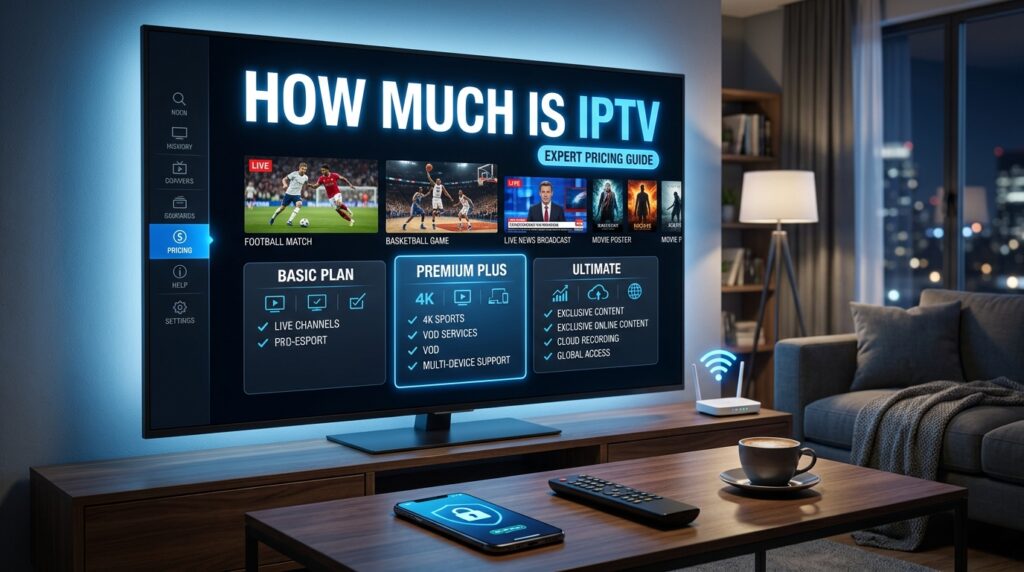
Analyzing the Pricing Tiers: How Much Is IPTV Exactly?
The digital streaming market is highly segmented. When you ask How Much Is IPTV, you will find providers offering services ranging from $3 per month up to $25 per month.
Understanding the differences between these pricing tiers is critical to ensuring your home theater actually functions during a major Sunday football game.
The Ultra-Budget Tier ($3 – $6 per month)
It is entirely possible to find resellers offering access for less than the price of a cup of coffee. However, these services operate on severely overloaded, cheap overseas servers.
During normal Tuesday morning viewing hours, an ultra-budget service might appear stable. But the moment a massive pay-per-view boxing match begins, these servers collapse under the weight of millions of concurrent connections, resulting in unwatchable buffering.
The Mid-Range Tier ($7 – $12 per month)
This is generally considered the starting point for reliable streaming. Services in this tier offer better server load balancing and a decently updated Electronic Program Guide (EPG).
While they are highly functional for standard daily viewing, they often lack native 4K streams and may still struggle slightly during the absolute highest peaks of domestic sports traffic.
The Premium Tier ($13 – $20 per month)
If you want to completely replicate the flawless, zero-buffer experience of a traditional cable box, this is How Much Is IPTV at the enterprise level.
Premium providers utilize localized Content Delivery Networks (CDNs) placed strictly within US data centers. This domestic proximity minimizes latency, guaranteeing 99.9% uptime, true 4K video resolution, and multi-connection capabilities.
Strategic Factors That Determine How Much Is IPTV
Beyond the base quality of the servers, several specific user requirements will fluctuate your final monthly cost. A premium provider will allow you to customize your subscription to perfectly match your household’s needs.
Subscription Duration Discounts
The most effective way to lower the cost of a premium service is to purchase a longer subscription block.
While a premium monthly plan might cost $15, purchasing a 12-month package often drops the effective monthly price down to around $5 to $8. However, experts always recommend testing a service on a short-term plan before committing to a discounted annual package.
Multi-Room Connections
Most baseline subscriptions allow for one active device connection at a time. If you want to watch a football game in the living room while your spouse watches a movie in the bedroom, you need a dual-connection plan.
Adding concurrent connections will slightly increase How Much Is IPTV costs per month, but it is vastly cheaper than renting a second cable box.
Understanding the Technology Behind the Price
To make an informed purchasing decision and truly understand How Much Is IPTV should cost, you must understand the underlying technology that powers digital video broadcasting.
Internet-based broadcasting fundamentally disrupts physical coaxial cable networks by transmitting compressed video data packets over the open web. For a deep technical overview of how this digital routing operates across global networks, you can review the Wikipedia entry on Internet Protocol Television.
A legitimate, premium provider operates on a vastly superior architectural foundation compared to cheap overseas resellers.
Domestic Content Headends
The source facilities where American live broadcasts and premium sports feeds are captured and digitized in real-time must be located domestically. If the headend is located in Europe, the data simply takes too long to reach an American television.
Localized Server Nodes and Middleware
Premium services use high-capacity servers strategically placed in major US data centers (like Dallas, Chicago, and New York).
Furthermore, they utilize advanced middleware to decrypt the localized video stream instantly, populating your channel guides without lag. This domestic infrastructure is precisely what you are paying for when you research How Much Is IPTV at the premium level.
Network Requirements for Flawless Streaming
One of the most common mistakes new users make is blaming their new streaming provider for buffering that is actually caused by their own weak home internet network.
Streaming live, uncompressed 4K video requires serious, consistent bandwidth. It does not matter How Much Is IPTV costs if your router cannot process the incoming video data efficiently.
According to official federal guidelines, specific dedicated speeds are required for uninterrupted digital viewing. You can consult the FCC Broadband Speed Guide for detailed bandwidth metrics and network topology standards.
To ensure your digital streams perform flawlessly, your local network must meet these strict minimums:
-
Standard Definition (SD): 5 Mbps dedicated download speed.
-
High Definition (1080p): 15 Mbps dedicated download speed.
-
Ultra High Definition (4K): 30+ Mbps dedicated download speed per active television.
Wi-Fi Optimization for Live Sports
To extract maximum performance from your new setup, relying on basic, ISP-provided Wi-Fi is rarely sufficient. Follow these professional networking optimizations:
-
Use Ethernet Cables: Hardwiring your streaming device directly to your router is the absolute best way to eliminate buffering and wireless packet loss entirely.
-
Utilize 5GHz Wi-Fi: If a physical cable is impossible due to your home’s layout, ensure your Smart TV is connected to the 5GHz Wi-Fi frequency, not the slower 2.4GHz band.
-
Run Accurate Speed Tests: Use a reliable diagnostic tool like Speedtest.net standing directly next to your television before booting up your streams.
Hardware Compatibility: Do You Need to Buy a Box?
When transitioning to digital broadcasting, device compatibility is crucial. You should never be forced to purchase a proprietary, locked-down set-top box from suspicious digital resellers.
When you secure a premium subscription, the provider will offer an entirely open software ecosystem. This means providing you with an Xtream Codes API login or a raw M3U playlist URL, allowing you to use your existing hardware.
Top Streaming Devices for 2026
-
Amazon Fire TV Stick 4K Max: The most popular device in America due to its incredibly low cost, Wi-Fi 6 capabilities, and immense third-party app flexibility.
-
Nvidia Shield Pro: The gold standard for high-end home theaters, capable of easily decoding heavy M3U playlists and upscaling standard-definition channels using AI processors.
-
Apple TV 4K: A premium, ad-free ecosystem that runs third-party streaming applications flawlessly for Apple users.
Open Ecosystems and Third-Party Apps
By utilizing an open ecosystem, you can connect your subscription to industry-standard applications like TiviMate or Smarters Pro. These apps allow you to customize your channel grids, record live television, and utilize multi-view for sports.
If you are unsure which hardware fits your living room, learn more about our highly compatible platforms on the IPTV Verse about us page.
Security and Digital Privacy
When migrating your household’s entertainment to the internet, understanding digital privacy is paramount. The underlying technology of receiving video packets over the web is standard and entirely legal for consumers.
However, the regulatory environment surrounding digital copyright is strict. To understand the framework of digital intellectual property in the United States, you can refer to the U.S. Copyright Office website.
VPNs and Bypassing ISP Throttling
Internet Service Providers (ISPs) actively monitor their customers’ web traffic. When you run digital streaming services and begin pulling heavy video data, your ISP may intentionally throttle (slow down) your connection to save network capacity during peak evening hours.
To prevent this artificial slowing and protect your digital privacy, cybersecurity experts highly recommend using a Virtual Private Network (VPN). A VPN creates an encrypted tunnel for your traffic, hiding your viewing habits from your ISP.
For extensive resources on protecting your consumer digital rights and maintaining internet neutrality, visit the Electronic Frontier Foundation (EFF).
Customer Support: The Hidden Value Metric
When evaluating different streaming platforms, most buyers focus entirely on channel counts and introductory pricing. However, experienced cord-cutters know that responsive customer support is the single most valuable feature.
Internet streaming relies on highly complex global servers. Occasionally, a live channel will go down, or a Video-On-Demand (VOD) movie link will need a manual refresh on the backend.
Avoiding Scam Resellers
When technical issues arise, you want to know that the company managing your entertainment offers real-time assistance. This support infrastructure is factored into How Much Is IPTV at the premium level.
Avoid companies that force you to use their heavily branded, locked applications and refuse to provide Xtream Codes API links. Furthermore, avoid providers that only offer support via a slow email ticketing system that takes days to reply.
For an example of how premium, 24/7 technical assistance should operate via live chat and WhatsApp, contact our dedicated support team.
How to Properly Test a Service Before Buying
Before making a year-long financial commitment to any streaming provider, it is absolutely vital that you test the service yourself. Never rely purely on marketing claims, vanity channel numbers, or outdated online reviews.
If you are ready to evaluate a new subscription, you must follow this rigorous testing methodology first:
-
Request a Short Trial: Never commit to more than a month initially without testing the servers on your own home network.
-
Test During Peak Hours: Watch a live sports channel between 7:00 PM and 10:00 PM on a Saturday evening to see how their servers handle peak domestic traffic.
-
Evaluate the VOD Library: Ensure the video-on-demand movies load quickly, offer 5.1 surround sound, and allow you to fast-forward without crashing your application.
-
Verify Device Freedom: Ensure the provider gives you the necessary API credentials to use your preferred media player.
To test a premium, open-system service that consistently passes all these rigorous stress tests, claim your 24-hour trial today before you officially buy a long-term plan.
Frequently Asked Questions
Exactly How Much Is IPTV compared to my cable bill?
The average American cable bill is $127 per month. A premium digital streaming subscription costs roughly $15 per month. Over the course of a single year, cutting the cord saves the average household over $1,300 in entertainment expenses.
Will my live sports streams buffer during a major event?
Buffering depends on two primary factors: the stability of the provider’s domestic servers and the quality of your home internet. If you secure a plan through a top-tier provider utilizing USA-based servers and maintain at least 30 Mbps of download speed, your streams will not buffer.
Can I use my own media player with these services?
Yes. Legitimate providers will provide you with an Xtream Codes API login, allowing you to link your service to highly customizable, third-party media players like TiviMate on Android or GSE Smart IPTV on Apple devices.
Is it safe to pay for a full year upfront?
No. When you first decide to upgrade your television, always start with a short trial or a one-month subscription. Verify the server stability, channel quality, and customer support responsiveness for a few weeks before committing to a longer, discounted annual plan.
Do I need a Smart TV to cut the cord?
No. While modern Smart TVs have excellent built-in applications, you can easily use any standard television by simply plugging an Amazon Fire TV Stick, Apple TV, or Android streaming box into an available HDMI port on the back of your television.
Conclusion: Make the Smart Cord-Cutting Choice
Cutting the cord and moving to internet-based television is the smartest financial and entertainment decision you can make in 2026. However, your decision on which provider to purchase from dictates your entire viewing experience in your living room.
The modern American viewer demands flawless live sports streams, a massive, frequently updated VOD library, and the absolute freedom to use whichever hardware they prefer. A service that locks you into a clunky proprietary application or suffers from severe server crashes during peak Saturday night hours is simply not worth your hard-earned money, regardless of how cheap it is.
The only way to truly know if a service meets your high standards is to test it under real-world conditions. You must become your own reviewer and prioritize localized server stability over generic marketing claims.
Are you looking for a streaming provider that prioritizes premium server stability, comprehensive American channels, and total device flexibility? Start your premium subscription today and unlock the ultimate home theater experience. If you need step-by-step assistance configuring your Firestick, Apple TV, or Smart TV, our expert technicians are available right now on WhatsApp at +212 642-212736 to provide immediate, personalized guidance.