

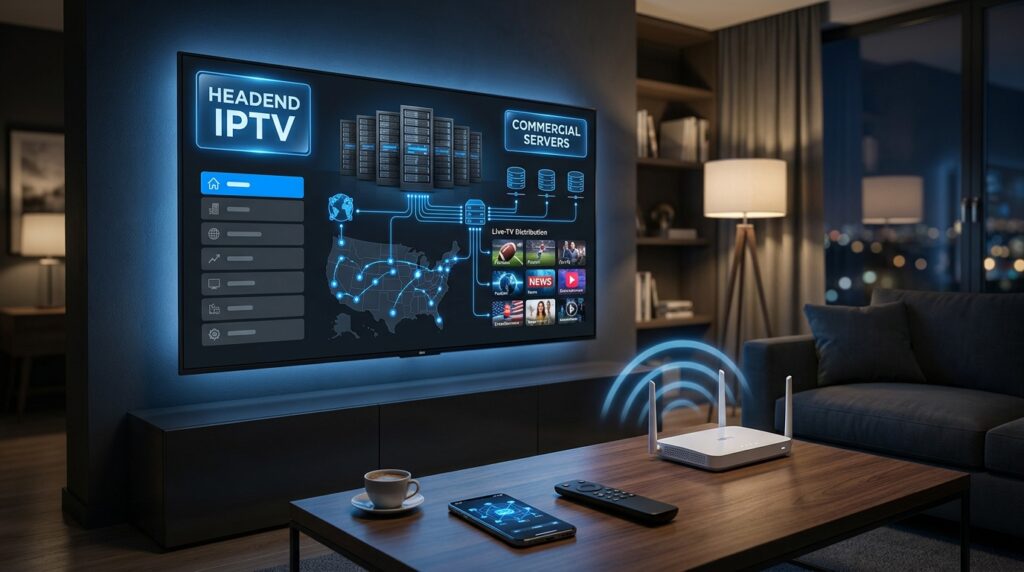
What Exactly is a Headend IPTV System?
To make an informed technological setup, you must first understand the complex technology utilized to deliver media to your living room. Traditional cable television relies on a massive, physical infrastructure of coaxial cables that constantly feed data directly into a locked-down set-top box.
Internet-based broadcasting bypasses these physical limitations entirely by transmitting data packets over the open web upon request. For a deep technical breakdown of this digital video distribution method, you can review the Wikipedia entry on Internet Protocol Television.
A commercial headend iptv facility is the brain of this entire operation. It is a highly secure, climate-controlled server farm filled with massive satellite dish arrays, commercial-grade decoders, and specialized digital transcoders.
The primary goal of a headend iptv system is to ingest hundreds of raw, uncompressed video signals from around the world, format them into efficient digital packets, and prepare them for rapid delivery to your home internet router.
The Three Stages of a Headend IPTV Operation
Navigating the crowded digital application marketplace requires strict evaluation criteria. Before you commit to a specific digital interface, you must understand the three distinct technical phases that a video signal goes through at the master facility.
A premium provider invests heavily in each of these three phases to ensure your live sports feeds remain flawlessly synchronized.
1. Signal Ingestion and Decryption
The first step at a headend iptv facility is signal reception. Massive commercial satellite dishes capture encrypted signals from global broadcasters.
These raw signals are then fed into professional Integrated Receiver Decoders (IRDs). These decoders legally decrypt the raw satellite feed so the headend iptv servers can manipulate the raw video and audio data.
2. Digital Transcoding and Compression
Raw video files are far too massive to send over a standard residential internet connection. The second phase involves running the video through highly advanced hardware encoders.
The headend iptv transcoders compress the video using advanced codecs, such as H.264 or H.265 (HEVC). This compression maintains the stunning 4K visual quality while drastically reducing the file size, allowing it to travel across the internet instantly without causing severe buffering on your end.
3. Middleware and Delivery
Once the video is compressed, the headend iptv middleware packages the video streams into a unified user interface. This middleware generates the Electronic Program Guide (EPG) and manages user authentication.
Finally, the localized video stream is pushed out to global Content Delivery Networks (CDNs) and sent directly to your streaming application.
The Financial Logic of Premium Headend IPTV Infrastructure
The primary catalyst driving American households to seek out new streaming alternatives is the undeniable, massive financial benefit of cutting the cord. Traditional cable providers are notorious for luring customers in with introductory pricing that quickly doubles.
When you meticulously analyze a standard cable invoice alongside modern streaming trends, the predatory fees driving consumers away become glaringly obvious.
Eliminating Hidden Cable Fees
Legacy cable companies layer their monthly bills with mandatory surcharges that drastically inflate your actual out-of-pocket cost.
-
Broadcast TV Fees: A mandatory $15 to $20 charge simply to access free, over-the-air local networks.
-
Regional Sports Surcharges: Applied to your bill regardless of whether you actually watch your local teams.
-
Equipment Rentals: Monthly charges of $10 to $15 for every single outdated set-top box in your home.
When you connect directly to a provider operating a premium headend iptv infrastructure, the financial model is built on radical transparency. You pay one flat subscription rate for total access, utilizing the smart streaming devices you already own, thereby eliminating hardware rental fees entirely.
Network Requirements for Headend IPTV Streaming
One of the most common mistakes new users make is blaming the provider’s headend iptv servers for buffering that is actually caused by their own weak home internet network.
Streaming live, uncompressed 4K video requires serious, consistent bandwidth. It does not matter how powerful the provider’s master facility is; if your router cannot process the incoming video packets efficiently, the stream will fail.
According to official federal guidelines, specific dedicated speeds are required for uninterrupted digital viewing. You can consult the FCC Broadband Speed Guide for detailed bandwidth metrics.
To ensure your home theater performs flawlessly, your local network must meet these strict minimums:
-
Standard Definition (SD): 5 Mbps dedicated download speed.
-
High Definition (1080p): 15 Mbps dedicated download speed.
-
Ultra High Definition (4K): 30+ Mbps dedicated download speed per active television.
Wi-Fi Optimization and Ethernet Standards
To extract maximum performance from the headend iptv data stream, relying on basic, ISP-provided Wi-Fi is rarely sufficient. Follow these professional networking optimizations:
-
Use Ethernet Cables: Hardwiring your streaming device directly to your router is the absolute best way to eliminate buffering and wireless packet loss entirely.
-
Utilize 5GHz Wi-Fi: If a physical cable is impossible, ensure your Smart TV is connected to the 5GHz Wi-Fi frequency, not the slower 2.4GHz band.
-
Run Accurate Speed Tests: Use a reliable diagnostic tool like Speedtest.net standing directly next to your television before booting up your streams.
Hardware Compatibility: Decoding the Headend IPTV Feed
When transitioning to digital broadcasting, device compatibility is crucial. You should never be forced to purchase a proprietary, locked-down set-top box from a reseller just to decode a video signal.
When you secure a premium subscription, the provider will offer an entirely open software ecosystem. This allows you to use whichever third-party application you prefer to process the data coming from the headend iptv facility.
Recommended Streaming Devices for 2026
-
Nvidia Shield Pro: The gold standard for high-end home theaters. It easily decodes heavy 4K streams coming from the headend iptv servers and upscales standard-definition channels using powerful AI processors.
-
Amazon Fire TV Stick 4K Max: The most popular device in America due to its incredibly low cost, Wi-Fi 6 capabilities, and immense third-party app flexibility.
-
Apple TV 4K: A premium, ad-free ecosystem that runs third-party streaming applications flawlessly and processes massive API playlists instantly.
Embracing Open Media Players
By utilizing an open ecosystem, you can connect your service to industry-standard applications like TiviMate on Android or IPTV Smarters Pro. These apps offer beautiful, cinematic user interfaces that seamlessly manage your content.
If you are unsure which hardware fits your living room, learn more about our highly compatible platforms on the IPTV Verse about us page.
Security, Privacy, and Headend IPTV Compliance
When migrating your household’s entertainment entirely to the internet, understanding digital privacy is paramount. The underlying technology of receiving video packets over the web is standard and entirely legal for consumers.
However, the regulatory environment surrounding digital copyright is strict. To understand the legal framework of digital intellectual property in the United States, you can refer to the U.S. Copyright Office website.
Bypassing Aggressive ISP Throttling
Internet Service Providers (ISPs) actively monitor their customers’ web traffic. When your device connects to a headend iptv server and begins pulling heavy video data for a live NFL game, your ISP may intentionally throttle (slow down) your connection.
To prevent this artificial slowing and protect your digital privacy, cybersecurity experts highly recommend using a Virtual Private Network (VPN). A VPN creates an encrypted tunnel for your traffic, completely hiding your viewing habits from your ISP. For extensive resources on protecting your consumer digital rights, visit the Electronic Frontier Foundation (EFF).
Headend IPTV Architecture vs. Cheap Resellers
When evaluating different streaming platforms, most buyers focus entirely on channel counts and introductory pricing. However, experienced cord-cutters know that the actual physical location of the headend iptv facility is the most valuable feature.
Internet video hosting relies on highly complex global servers. If you buy a $5-a-month subscription from an overseas reseller, you are not connecting to a premium facility.
Why Geography Matters
If you are watching a live sports event in Texas, but the headend iptv facility is located in Eastern Europe, your video packets must cross the ocean. This transatlantic journey results in massive latency and constant buffering during high-traffic sports events.
A premium provider routes the video feed directly from localized headend iptv facilities placed in major US data centers to eliminate latency completely. To see how a meticulously organized, domestically hosted live TV lineup should look, browse our comprehensive channels list.
How to Test a Premium Headend IPTV Provider
Before making a year-long financial commitment to any streaming platform, it is absolutely vital that you test the service yourself. Never rely purely on marketing claims, vanity channel numbers, or outdated online reviews.
If you are ready to evaluate a new subscription, you must follow this rigorous testing methodology first to ensure their headend iptv facility is robust:
-
Request a Short Trial: Never commit to more than a month initially without testing the servers on your own home network.
-
Test During Peak Hours: Watch a live sports channel between 7:00 PM and 10:00 PM on a Saturday evening to see how their headend iptv servers handle peak domestic traffic.
-
Evaluate the EPG Speed: Ensure the TV guide data loads quickly and accurately reflects your local time zone.
To test a premium, open-system service that consistently passes all these rigorous stress tests, claim your 24-hour trial today before you officially buy a long-term plan.
Frequently Asked Questions
What is the main benefit of a premium headend iptv provider?
The primary benefit is massive server stability and visual clarity. Premium facilities use advanced transcoders to deliver true 4K resolution and utilize domestic USA servers to ensure your sports streams never buffer during critical moments.
Will my live sports streams buffer during a major event?
Buffering depends on two primary factors: the stability of the provider’s headend iptv servers and the quality of your home internet. If you secure a plan through a top-tier provider and maintain at least 30 Mbps of download speed, your streams will not buffer.
Can I use my own media player with these services?
Yes. Legitimate platforms will provide you with an Xtream Codes API login, allowing you to link your service to highly customizable, third-party media players like TiviMate on Android or GSE Smart IPTV on Apple devices.
Is it safe to pay for a full year upfront?
No. When you first decide to upgrade your television, always start with a short trial or a one-month subscription. Verify the headend iptv server stability and customer support responsiveness for a few weeks before committing to a longer, discounted annual plan.
Do I need a Smart TV to cut the cord?
No. While modern Smart TVs have excellent built-in applications, you can easily access any premium platform on any standard television by simply plugging an Amazon Fire TV Stick, Apple TV, or Android streaming box into an available HDMI port on the back.
Conclusion: Upgrade Your Entertainment Today
Cutting the cord and moving to internet-based television is the smartest financial and entertainment decision you can make in 2026. However, your decision on which platform to purchase dictates your entire viewing experience in your living room.
The modern American viewer demands flawless live sports streams, a massive, frequently updated VOD library, and the absolute freedom to use whichever hardware they prefer. A service that locks you into a clunky proprietary application or suffers from severe headend iptv server crashes during peak Saturday night hours is simply not worth your hard-earned money.
The only way to truly guarantee a seamless television experience is to ensure you are utilizing a platform powered by enterprise-grade headend iptv facilities. You must become your own reviewer and prioritize localized server stability over generic marketing claims.
Are you looking for a streaming provider that prioritizes premium server stability, comprehensive American channels, and total device flexibility? Start your premium subscription today and unlock the ultimate home theater experience. If you need step-by-step assistance setting up your Firestick, optimizing your network, or contacting customer service, our expert technicians are available right now on WhatsApp at +212 642-212736 to provide immediate, personalized guidance.